

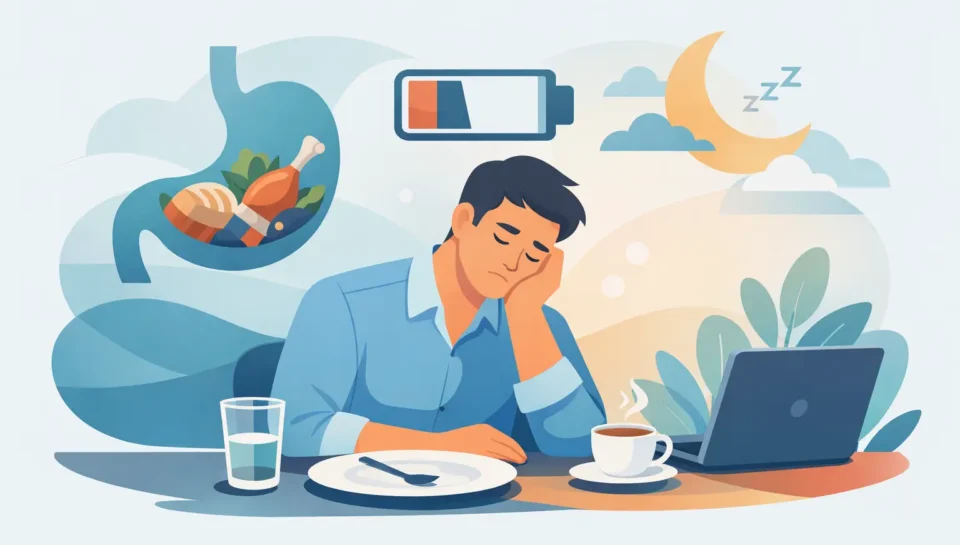
You finish lunch, and within half an hour your focus drops, your eyelids feel heavy, and the rest of the afternoon suddenly looks much harder than it should. If low energy after eating has become a pattern rather than an occasional off day, it is worth paying attention. That post-meal slump is not always just about being busy or getting older. Very often, it is your body asking for a closer look at digestion, blood sugar balance, meal composition, stress levels, or even hidden food sensitivities.
For many people, especially women juggling work, family, hormonal changes and long-standing digestive symptoms, this kind of tiredness gets dismissed for far too long. Yet energy is one of the clearest signs of how well the body is coping. When meals leave you drained instead of nourished, there is usually a reason.
What low energy after eating can mean
Feeling sleepy after a very large meal can be perfectly normal. A Sunday roast followed by a quiet afternoon is a different story from feeling flattened after breakfast or needing caffeine after every lunch. Frequency matters, and so does context.
Low energy after eating can reflect how your body is processing food, not simply how much sleep you had the night before. Digestion requires energy. Blood is directed towards the digestive system, hormones are released, and blood sugar rises and falls. If that process is under strain, the body can respond with fatigue, brain fog, shakiness, bloating, irritability or cravings.
The key is to notice whether the tiredness is occasional, predictable, or linked to specific foods. Does it happen after sandwiches, pasta, sweet snacks, dairy, or wine? Does it come with abdominal discomfort, flushing, loose stools, constipation, or a heavy feeling in the head and limbs? Patterns tell a story.
The most common reasons you feel tired after meals
Blood sugar highs and lows
One of the most common causes is a rapid rise in blood sugar followed by a steep drop. Meals high in refined carbohydrates or sugar can create a quick burst of energy, but if the body then releases a strong insulin response, you may be left feeling shaky, hungry, flat or sleepy soon afterwards.
This is especially common when breakfast is toast and jam, cereal, pastries or coffee without enough protein. The same can happen at lunch if a meal is built around white bread, crisps, pasta or sugary drinks. You may feel fed, but not truly sustained.
That does not mean carbohydrates are bad. It means balance matters. Pairing carbohydrates with protein, healthy fats and fibre usually creates a steadier release of energy.
Food intolerances or sensitivities
Sometimes fatigue after eating is less about blood sugar and more about the body reacting to a food it does not handle well. This reaction may not look dramatic. It can be subtle and delayed, showing up as tiredness, bloating, headaches, skin flares, sinus congestion, low mood, or digestive discomfort.
Common triggers vary from person to person, but wheat, dairy, eggs, yeast and certain additives can all play a part. Some people notice the effect quickly, while others simply live with a daily fog that lifts only when the trigger is identified.
This is where a personalised approach matters. Generic elimination diets can be useful for short periods, but guessing often creates more confusion. When someone feels low in energy after eating day after day, careful assessment can save months of trial and error.
Digestive strain
If your digestive system is not working efficiently, eating can feel more like hard work than nourishment. Low stomach acid, sluggish bile flow, enzyme insufficiency, gut imbalance and constipation can all affect how food is broken down and absorbed.
In practice, this often looks like tiredness with bloating, excessive fullness, trapped wind, reflux, nausea, burping, or a sense that food just sits in the stomach. If nutrients are not being absorbed properly, energy can suffer over time even if you are eating what appears to be a healthy diet.
People are often surprised by how much digestive burden stress can create. You can eat an excellent meal, but if you are eating at your desk, rushing, worrying, or barely chewing, your body may not be in the right state to digest it well.
Meals that are simply too large
Portion size is not a fashionable topic, but it matters. Very large meals can leave the body working hard for hours. This does not mean strict restriction. It means noticing whether you feel better with lighter, more balanced meals rather than heavy plates that leave you needing the sofa.
For some people, a large evening meal is tolerated well, but a heavy lunch ruins the second half of the day. It depends on your schedule, digestion, stress load and metabolism.
Poor sleep, stress and hormonal shifts
Not every episode of post-meal fatigue starts with food. If you are already running on empty because of poor sleep, adrenal strain, perimenopause, thyroid issues or chronic stress, eating may simply reveal the weakness in the system.
Many women notice that energy becomes less predictable during hormonal transitions. Blood sugar regulation can become more fragile, sleep quality may drop, and meals that once felt fine now leave them sluggish. This is not a personal failing. It is a sign that the body may need more support and a different rhythm.
How to investigate low energy after eating gently and sensibly
The most helpful first step is observation, not restriction. Keep a simple note of what you eat, when the fatigue starts, how long it lasts, and any other symptoms that appear alongside it. Include your stress levels, sleep and bowel habits too. A pattern often becomes obvious within a week or two.
Then look at the balance of your meals. A plate that contains protein, fibre, healthy fats and slower-release carbohydrates usually supports better energy than one built mostly on refined starch. Eggs with vegetables, chicken and salad with quinoa, or porridge topped with seeds and nut butter will often sustain you far better than toast alone or a sugary cereal.
Eating more slowly can make a real difference. Chewing properly, sitting down, and taking a few calm breaths before a meal are simple but powerful ways to support digestive function. It sounds basic because it is, but basic does not mean unimportant.
Hydration also matters. Dehydration can intensify fatigue and make digestion feel heavier. Some people also find they are relying on caffeine to push through tiredness, only to worsen blood sugar swings later in the day.
When low energy after eating points to something deeper
If the problem is persistent, worsening, or accompanied by symptoms such as dizziness, palpitations, ongoing bloating, unexplained weight changes, loose stools, constipation, heavy periods, anxiety or frequent headaches, it is sensible to investigate further. Fatigue after meals can sometimes sit alongside nutrient deficiencies, poor gut health, insulin resistance, thyroid imbalance or a chronic inflammatory response.
This is where one-to-one support can be so valuable. Rather than chasing symptoms in isolation, a holistic assessment looks at the whole picture: digestion, food reactions, stress, sleep, hormones, emotional health and daily routines. At Ask Nutrition, this kind of personalised work is designed to help people understand their body’s signals rather than override them.
There is also an emotional side to this that should not be ignored. Repeated tiredness after eating can make people anxious around food. They start skipping meals, eating less than they need, or blaming themselves for lacking discipline. In reality, the body is often communicating quite clearly. The task is to listen with curiosity, not criticism.
What tends to help most
For some people, the answer is as simple as changing breakfast, reducing sugar, and eating more steadily through the day. For others, the real shift comes when a food intolerance is identified, digestive support is introduced, or chronic stress is finally addressed.
There is no single rule that fits everyone. A high-protein meal helps many people, but not if digestion is weak and the meal is too heavy. More fibre can support blood sugar and bowel health, but not if the gut is already irritated and needs a gentler approach first. Even healthy foods can feel draining if they are wrong for your body at that moment.
That is why thoughtful, individual care matters. Quick fixes often miss the reason the fatigue is happening in the first place.
If you regularly feel your energy disappear after meals, do not brush it aside as something you just have to live with. The body is remarkably wise, and when it keeps repeating the same signal, it is usually worth hearing. With the right support, meals can begin to feel nourishing again rather than something you have to recover from.