
One week your usual meals feel absolutely fine. The next, you are bloated by mid-afternoon, your bowels have changed, and foods you have eaten for years suddenly seem harder to tolerate. Perimenopause and digestive issues often arrive together like this – quietly at first, then persistently enough to affect energy, confidence and day-to-day comfort.
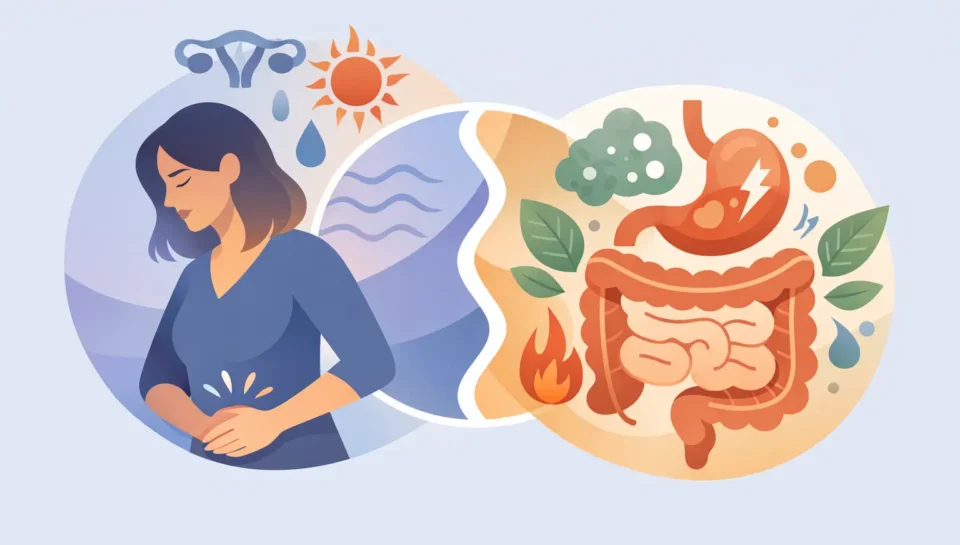
For many women, this can be confusing. Digestive symptoms are often treated as a separate problem, while hormone changes are discussed on their own. In practice, the body does not work in isolated compartments. Hormones influence the gut, the gut influences hormone balance, and stress can amplify both. When you understand that connection, the symptoms start to make more sense.
Why perimenopause and digestive issues often overlap
Perimenopause is a time of fluctuation. Oestrogen and progesterone do not simply decline in a straight line. They can rise and fall unpredictably, and those shifts affect far more than periods and mood.
The digestive system is especially sensitive to hormonal change. Oestrogen can influence gut motility, inflammation and the balance of bacteria in the bowel. Progesterone can slow digestion, which may leave you feeling heavy, constipated or unusually full after meals. If hormone levels are changing from month to month, digestive comfort can change with them.
Many women also notice that stress becomes less forgiving in this stage of life. You may be juggling work, ageing parents, teenagers, poor sleep and your own changing health. The gut and nervous system are closely linked, so when the body is in a prolonged state of strain, symptoms such as bloating, cramping, reflux and altered bowel habits can become more frequent.
This is one reason a whole-person approach matters. If you only look at the gut, you may miss the hormonal picture. If you only look at hormones, you may miss food reactions, gut imbalance or long-standing bowel sluggishness.
Common digestive symptoms during perimenopause
The most common complaints tend to be bloating, constipation, reflux, nausea, trapped wind and a sense that digestion has become slower or less predictable. Some women also notice looser stools at certain points in the month, while others feel more sensitive to rich foods, alcohol, caffeine or wheat.
Bloating is one of the biggest frustrations because it can feel disproportionate to what you have eaten. Sometimes this is linked to slower transit time. Sometimes it reflects changes in stomach acid, food intolerances, bacterial imbalance or stress-related digestive disruption. There is not always one single cause.
Constipation is also common, particularly where progesterone remains relatively high at certain points or where stress, low fibre intake, dehydration and reduced movement are all adding to the problem. If bowel motions become less frequent, toxins and hormones may not be cleared as efficiently, which can leave you feeling even more sluggish and uncomfortable.
Reflux can become more noticeable too. That may be linked to slower digestion, pressure from bloating, meal timing, stress, or changes in the way the stomach empties. It depends on the individual, which is why blanket advice does not always help.
Why old foods can suddenly feel like a problem
A very common question is this: why can I no longer eat foods I have always tolerated?
Sometimes the issue is not the food itself but the body’s changing ability to process it. If digestion has slowed, stomach acid is lower, the gut lining is irritated, or the bowel microbiome is less balanced, foods that were once manageable may now trigger symptoms. Perimenopause can expose weaknesses that were already there, even if they had been quietly compensated for over many years.
That does not always mean you need to remove large numbers of foods. In some cases, temporary support for digestion and gut healing is more helpful than a highly restrictive diet. In others, identifying specific intolerances can bring real relief. The key is to avoid guessing for too long.
What is happening in the gut during perimenopause?
The gut microbiome, the community of bacteria and other microbes living in the digestive tract, can shift with age and hormone change. Certain gut bacteria are involved in the metabolism of oestrogen, which means there is a two-way relationship between hormone health and digestive health.
If the microbiome is out of balance, you may be more prone to bloating, inflammation, sluggish bowels and poorer resilience after antibiotics, illness or stress. This can also affect energy, mood and immune function. That is why digestive symptoms during perimenopause often come with a wider picture – tiredness, brain fog, irritability, skin changes or feeling generally unlike yourself.
The liver and bowels also play a part in clearing used hormones from the body. If bowel motions are infrequent or digestion is not working efficiently, hormone metabolites may not be excreted as smoothly as they should be. Again, this is not about blame. It is about understanding how interconnected the systems are.
How to support perimenopause and digestive issues naturally
A gentle, consistent approach usually works better than a dramatic overhaul. At this life stage, the body often responds best to steadiness rather than extremes.
Start with rhythm. Eating in a calmer state, chewing properly and allowing regular meal times can make more difference than many people expect. If you eat on the run, skip meals, then have a large evening meal after a stressful day, the digestive system is being asked to work against the nervous system rather than with it.
It also helps to look at what your body is repeatedly reacting to. A food and symptom diary can reveal patterns, especially if symptoms flare around certain foods, times of day or phases of the cycle. This can be more useful than cutting out dairy, gluten and sugar all at once and hoping for the best.
Fibre matters, but the type matters too. Some women do well with more cooked vegetables, oats, seeds and stewed fruit rather than large raw salads. If bloating is severe, adding more fibre too quickly can make things worse. The right pace is individual.
Hydration and movement are often underestimated. Bowels need fluid, and gentle daily movement can support motility, lymphatic flow and stress regulation. That does not have to mean punishing exercise. Walking, stretching and strength work can all help.
Sleep and emotional well-being also deserve attention. Poor sleep can worsen insulin balance, hunger, stress hormones and digestive function. Likewise, unresolved emotional strain often shows up in the gut. This is where compassionate support can be so valuable, because healing is rarely just about what is on the plate.
When testing and personalised support can help
If symptoms are ongoing, worsening or affecting quality of life, a personalised assessment is worthwhile. There may be food intolerances, bacterial imbalance, chronic constipation, poor digestive capacity or stress patterns that need to be addressed in a more structured way.
This is especially true if you are constantly bloated, relying on antacids, struggling with stubborn constipation, or feeling anxious around food because you no longer know what will trigger symptoms. A more informed approach can save months, sometimes years, of trial and error.
At Ask Nutrition, this kind of work is never about chasing a quick fix. It is about understanding your history, your symptoms and the wider picture of your health so that support is realistic, nurturing and tailored to you.
When not to assume it is just hormones
Although perimenopause can absolutely affect digestion, not every digestive symptom should be put down to hormone change. Persistent pain, unexplained weight loss, bleeding, difficulty swallowing, severe reflux, or a sudden major change in bowel habits should always be properly checked.
It is also worth speaking to a practitioner if symptoms are mild but constant. Many women normalise discomfort because they are told this phase is something to simply endure. That is not a helpful standard. You may not control every hormonal shift, but you can support the way your body responds to it.
Perimenopause asks the body to adapt, and sometimes the gut is where that message shows up first. If your digestion has become more sensitive, that is not a sign that your body is failing. More often, it is asking for a slower pace, better support and a more joined-up way of looking at health. With the right guidance, this stage can become a point of deeper understanding rather than ongoing frustration.