

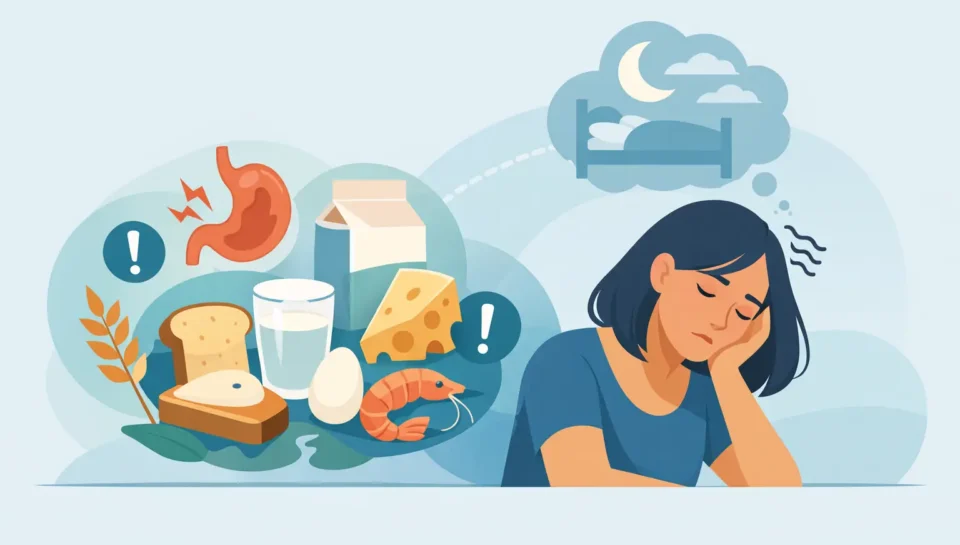
You eat what seems like a healthy lunch, yet by mid-afternoon your energy has vanished. You feel foggy, flat and oddly heavy, even when you slept reasonably well. If you have ever wondered, can food intolerance cause fatigue, the short answer is yes – but usually not in a simple, one-food, one-symptom way.
Fatigue linked to food intolerance tends to build through patterns rather than dramatic reactions. Many people expect a food issue to look obvious, such as hives or sudden stomach pain. In practice, intolerance is often quieter. It may show up as bloating, headaches, unsettled bowels, low mood, poor concentration and a lingering sense that your body is working much harder than it should.
Can food intolerance cause fatigue in a real, everyday sense?
Yes, it can. Food intolerance can contribute to fatigue by placing ongoing stress on digestion, the immune system and the body’s wider regulatory systems. When your body is repeatedly struggling with foods that do not suit you, energy may be diverted away from daily function and towards managing irritation, inflammation and repair.
This does not mean every tired day is caused by food. Fatigue is broad and can be influenced by hormones, sleep quality, stress, iron levels, blood sugar balance, thyroid health, medication, infections and emotional strain. Still, if tiredness sits alongside digestive symptoms or seems to worsen after particular meals, food intolerance is worth exploring.
What makes this area confusing is that intolerance is not the same as an immediate food allergy. Allergies tend to involve a rapid immune response and can be severe. Intolerances are often delayed, less dramatic and more cumulative. You might eat something on Monday and feel the effect later that day, the next morning or only after it has appeared in your diet repeatedly.
Why food intolerance may leave you drained
Digestion is not a passive process. It asks a great deal of the body, especially when the gut is already irritated. If a food is not being tolerated well, your digestive system may become inflamed or inefficient, leaving you with bloating, discomfort and that familiar post-meal slump.
There are several ways this can affect energy. One is through low-grade inflammation. Another is poor absorption. If your gut lining is under strain, you may not break down and absorb nutrients as well as you should. Over time, this can influence your energy production, mood and resilience.
Blood sugar can also play a part. Some people with food intolerances rely on convenient foods because they feel too tired to cook, and that can create a cycle of quick energy followed by a crash. Others find that certain foods trigger cravings, leaving them on an emotional and physiological rollercoaster that adds to exhaustion.
There is also the nervous system to consider. When the body is irritated, unsettled or inflamed, it does not always rest deeply. You may sleep for eight hours and still wake unrefreshed. For many women over 30, especially those navigating hormonal changes or chronic digestive issues, this combination can feel relentless.
Common signs that fatigue may be linked to food intolerance
The clearest clue is often timing and repetition. You may notice that you regularly feel sleepy, foggy or irritable after certain meals. You may also feel better when eating simply, then worse again when old habits return.
Digestive symptoms matter here. Bloating, constipation, loose stools, reflux, excessive wind and abdominal discomfort often travel alongside fatigue when food intolerance is involved. Skin flare-ups, headaches, sinus congestion and joint achiness may also appear in the same picture.
Sometimes the signs are subtle. You may not feel sharply unwell after a meal, but you constantly feel as if your energy is never properly restored. That is often when people start to suspect stress, age or a busy lifestyle alone, when in fact their body may be dealing with repeated food triggers in the background.
Which foods are most often involved?
There is no universal culprit, and this is where personal support matters. Common trigger foods can include dairy, wheat, gluten-containing grains, eggs, soya, yeast, certain nuts and highly processed foods. For some people, histamine-rich foods or additives are more problematic than the foods usually blamed in mainstream conversations.
That said, it is rarely wise to remove large food groups on guesswork alone. Over-restriction can create its own problems, including nutritional imbalance, anxiety around food and a diet that becomes too narrow to support healing. The goal is not to fear food. The goal is to understand your own body clearly.
It may not be only the food
One of the most important truths in holistic practice is that symptoms rarely have just one cause. A food that was manageable during a calm period may become problematic during times of stress, poor sleep, hormonal upheaval or gut imbalance.
For example, if your digestion is sluggish, stomach acid is low, the gut microbiome is out of balance or constipation is chronic, foods can begin to feel heavier and harder to tolerate. Emotional pressure can also alter digestion significantly. Many people notice that they cope less well with certain meals when they are anxious, rushing or depleted.
This is why a whole-person approach matters. Asking only, what food is the problem, can miss equally important questions such as, why is the body struggling right now, and what needs support for resilience to return?
Can food intolerance cause fatigue even without major digestive symptoms?
Yes, sometimes it can. Not everyone with food intolerance has obvious bloating or bowel changes. In some cases, the main symptoms are fatigue, brain fog, headaches or a general sense of inflammation.
This is especially true when the issue has been present for a long time and the person has normalised how they feel. They may describe themselves as always tired, always a bit puffy, always craving sugar or caffeine, and not quite themselves. When the right triggers are reduced and the gut is supported, the change can feel surprisingly significant.
Still, it is wise not to assume. Ongoing fatigue deserves proper attention because it can sit alongside iron deficiency, B12 insufficiency, underactive thyroid, perimenopause, chronic stress or other health concerns that need investigation.
How to explore the link safely
Begin by observing rather than reacting. A simple food and symptom diary kept for two to three weeks can be very revealing. Note what you eat, when you eat, your energy through the day, your sleep, bowel habits, stress levels and any symptoms that follow. Patterns often appear when daily life is viewed as a whole rather than meal by meal.
If a particular food seems suspicious, avoid making dramatic cuts without guidance. A structured approach is far more useful than random elimination. When needed, food intolerance testing may provide an additional layer of information, especially when symptoms are complex or longstanding. The value lies not just in the test itself, but in interpreting the results carefully and placing them in the context of your health, digestion and lifestyle.
Supportive foundations matter as much as identifying triggers. Eating in a calmer state, chewing properly, spacing meals well, staying hydrated and choosing nourishing, less processed foods can all reduce the burden on the digestive system. If constipation, bloating or poor gut function are present, these often need direct support too.
At Ask Nutrition, this kind of work is approached with care, not fear. The aim is to help people understand what their body is asking for, restore confidence around food and rebuild energy from the inside out.
When to seek professional support
If your fatigue is persistent, worsening or affecting daily life, it is time to look more closely. The same applies if you have significant digestive symptoms, unexplained weight changes, very heavy periods, dizziness, breathlessness or a history of nutrient deficiency.
Professional support can help you separate likely food-related symptoms from other drivers and create a plan that is realistic and nourishing. This is especially valuable if you have already tried cutting foods on your own and feel no clearer, only more restricted.
Healing is rarely about chasing perfection. More often, it is about listening carefully, reducing what is aggravating the system and strengthening the body’s ability to cope.
If you suspect your meals are affecting your energy, trust that observation. Fatigue is not always something to push through. Sometimes it is one of the clearest messages your body can give, inviting you to slow down, look beneath the surface and choose support that brings you back to yourself.