

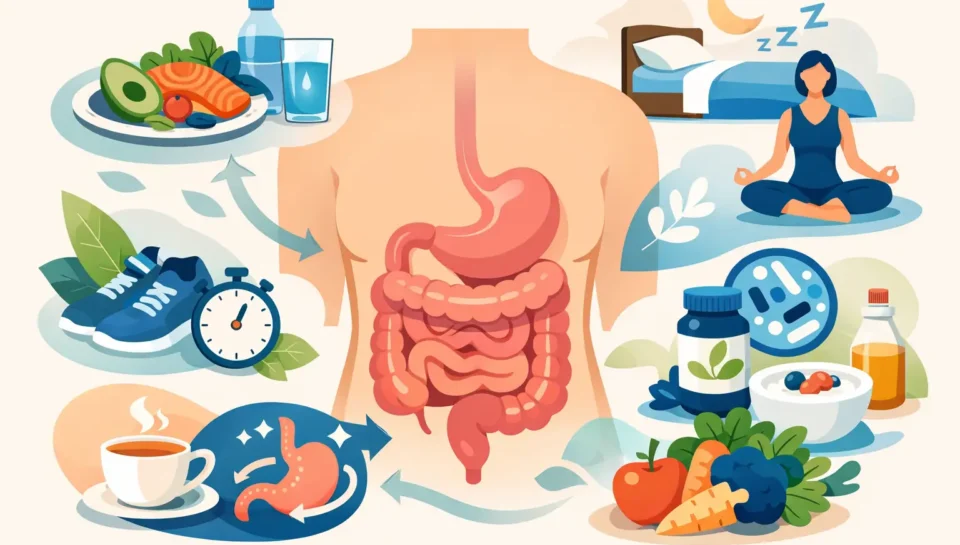
A surprising number of digestive symptoms begin long before food reaches the stomach. They start in the rush of the morning, the skipped lunch, the coffee on an empty stomach, the meals eaten standing up, and the stress carried quietly through the day. When people ask about the best habits for digestive health, they are often hoping for one food, one supplement, or one test. In practice, the foundations are usually simpler and more powerful than that.
Good digestion is not only about what you eat. It is also about how your body receives food, how well you break it down, how regularly your bowels move, and how supported your nervous system feels throughout the day. For many adults, especially women managing hormonal shifts, busy work, family responsibilities and low energy, these pieces are deeply connected.
Why the best habits for digestive health are often the simplest
Digestive health tends to improve when the body feels safe, nourished and consistent. That does not mean perfection. It means creating steady rhythms that support the gut rather than pushing it from one extreme to another.
This can be frustrating if you are used to being told to cut out more foods or follow a strict plan. Elimination diets and targeted protocols can sometimes be helpful, particularly where food intolerances or persistent symptoms are involved, but they work best when the basics are in place first. Without those basics, even a carefully chosen plan may bring only partial relief.
Eat in a calmer state
One of the most overlooked habits is simply slowing down before meals. Digestion works best when the nervous system is in a more settled state. If you eat while anxious, distracted or rushing between tasks, the body is less prepared to produce digestive juices and move food through efficiently.
This does not require a perfect routine. Even pausing for a minute, sitting down properly, and taking a few slow breaths before eating can make a difference. Over time, this gentle signal of safety can improve bloating, heaviness and that uncomfortable feeling that food just sits there.
For some people, this sounds too simple to matter. Yet in clinic work, it is often one of the first changes that begins to shift stubborn symptoms.
Chew more than you think you need to
Chewing is the first mechanical stage of digestion, but many people barely do it. Soft foods, quick lunches and screen-based eating all encourage swallowing food before it has been broken down properly.
When you chew thoroughly, you reduce the burden on the stomach and small intestine. You also mix food with saliva, which begins digestion and sends important signals to the rest of the digestive tract. If bloating appears soon after meals, poor chewing may be one of the missing pieces.
You do not need to count every mouthful. Just notice whether your meals are being eaten or inhaled.
Build regular meal timing
The digestive system responds well to rhythm. Grazing constantly, skipping meals, then eating heavily late in the evening can leave the gut working hard at the wrong times. Many people with bloating, constipation or fluctuating energy benefit from more regular meal timing.
That does not mean everybody needs identical eating windows. Some people feel best with three balanced meals, while others do better with an afternoon snack as well. The aim is not rigid control. It is to avoid long periods of under-fuelling followed by overeating when the body is already depleted.
Late-night eating can be particularly troublesome if you struggle with reflux, poor sleep or sluggish digestion. Giving your body a little space between your final meal and bedtime often helps, though the right gap varies from person to person.
Support the bowel with fibre, fluid and consistency
If the bowels are not moving well, the whole system tends to suffer. Constipation can contribute to bloating, discomfort, headaches, skin issues and a general sense of heaviness. Yet many people have become so used to irregularity that they no longer recognise it as a digestive problem.
Fibre matters, but it is not as simple as adding bran and hoping for the best. Some forms of fibre can be irritating when the gut is inflamed or very sensitive. A gentler approach is often better – vegetables, berries, oats, seeds, pulses if tolerated, and enough variety across the week.
Fluid is just as important. Increasing fibre without enough water can worsen constipation. Warm drinks and cooked foods can also be supportive for some people, especially if digestion feels weak or sluggish. This is where a whole-person view matters. The best approach depends on your constitution, symptoms and tolerance.
Notice your personal triggers without becoming fearful of food
Not every healthy food is healthy for every person. Some people react to dairy, wheat, eggs or certain fruits and vegetables. Others notice symptoms from processed foods, alcohol, fizzy drinks or excessive caffeine. Paying attention to patterns can be useful, especially if symptoms are recurring.
At the same time, it is easy to become anxious and over-restrictive. Cutting out large food groups without proper guidance can create nutritional gaps, social stress and an increasingly fearful relationship with eating. A better habit is to observe carefully. What foods trigger symptoms, how quickly, in what quantity, and under what circumstances?
Sometimes the issue is the food itself. Sometimes it is the combination of stress, speed, hormonal changes and digestive weakness that lowers tolerance. This is why two people can eat the same meal and have very different experiences.
Include enough bitter and whole foods
Modern diets often lean heavily towards sweet, refined and convenient foods, even when they look outwardly healthy. The digestive system generally benefits from more whole foods and, for many people, a little natural bitterness. Bitter flavours can gently encourage digestive secretions and support the liver-gallbladder relationship involved in fat digestion.
This might look like rocket, watercress, radishes, herbs, lemon, chicory or a mixed salad before a main meal, depending on what suits you. Warm cooked vegetables, soups and simple whole-food meals can be just as valuable, particularly if raw foods leave you bloated.
The point is not to eat perfectly. It is to give the gut real food to work with more often than not.
Make stress reduction part of your digestive plan
There is no meaningful conversation about gut health without talking about stress. The bowel and brain are in constant communication. When stress is ongoing, digestion often becomes irregular – appetite changes, bloating increases, bowel habits shift, and sensitivity to foods can rise.
This does not mean symptoms are all in your head. It means the body is responding intelligently to pressure. Emotional strain, overwork, poor sleep, unresolved grief and constant vigilance can all show up in the digestive system.
Support does not need to be dramatic. Walking, breathing practices, better boundaries, rest, gentle movement and emotional support all matter. For some, this is the turning point. The gut improves not because they found a miracle food, but because the body is no longer being asked to digest under constant pressure.
Respect the role of movement
The bowel likes movement. A sedentary routine can slow transit time and add to bloating and constipation, while regular gentle activity often helps the digestive tract do what it is meant to do.
You do not need punishing exercise. In fact, very intense training can sometimes aggravate digestion, particularly if recovery is poor or meals are rushed. Walking after meals, stretching, yoga and steady daily movement are often more beneficial for sensitive digestive systems than extreme workouts.
For women balancing hormones, energy dips and stress, gentler consistency usually works better than all-or-nothing effort.
Sleep more seriously than you may have done before
Poor sleep affects hunger signals, stress chemistry, blood sugar balance and the gut itself. If you are sleeping badly, digestion will often struggle too. This is particularly common in midlife, when hormonal shifts can disrupt both sleep and bowel function.
A regular bedtime, less stimulation late in the evening, and a calmer approach to the final hour of the day can all support digestive function indirectly. Sleep is not separate from gut health. It is one of the conditions that allows it to recover.
Know when habits are not enough on their own
Even the best habits for digestive health cannot solve everything. If you have persistent bloating, reflux, constipation, loose stools, abdominal pain, fatigue, skin flare-ups or a strong suspicion of food intolerance, it may be time for a more personalised assessment.
Sometimes the issue lies deeper – low stomach acid, enzyme insufficiency, microbial imbalance, unresolved food sensitivities, chronic stress patterns, or simply years of compensating around symptoms without proper support. This is where experienced guidance can save time, confusion and unnecessary restriction.
At Ask Nutrition, the emphasis is always on understanding the whole person rather than chasing symptoms in isolation. Digestive healing is rarely about forcing the body. More often, it is about listening carefully, restoring balance and giving the system what it has been missing.
The most helpful habit of all may be this: stop treating digestive discomfort as something you must simply put up with. Your body is communicating, not failing, and when you respond with patience and clarity, change becomes much more possible.