

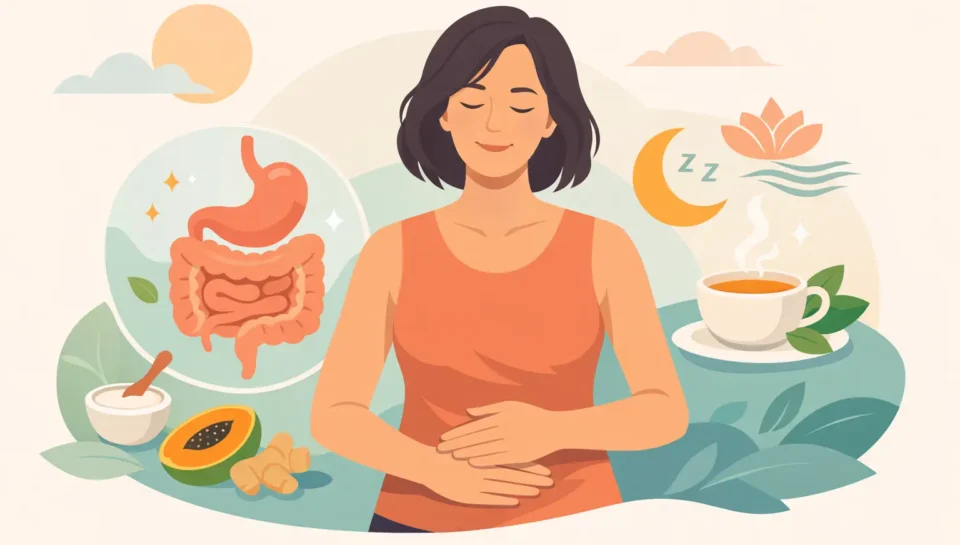
A meal that once left you feeling satisfied may suddenly bring bloating, reflux or an uncomfortable heaviness. You may also notice constipation one week and looser stools the next. Learning how to support perimenopause digestion starts with recognising that these changes are real, common and worthy of care – not something you simply have to put up with.
Perimenopause is the transition before periods stop completely, and it can last several years. During this time, oestrogen and progesterone fluctuate rather than declining in a neat, predictable line. These hormones influence far more than the menstrual cycle. They affect the speed at which food moves through the bowel, the gut microbiome, fluid balance, stress sensitivity, sleep and appetite. When digestion feels different, the answer is rarely one strict diet. It is more often a process of listening, simplifying and supporting your body consistently.
Why digestion can change in perimenopause
Oestrogen helps support the gut lining, the diversity of gut bacteria and the movement of food through the digestive tract. As levels vary, some women find that their bowel becomes slower and stools harder to pass. Others experience more urgency, cramping or sensitivity to foods that previously caused no trouble.
Progesterone can also slow gut motility. In the earlier stages of perimenopause, when progesterone may fluctuate or begin to reduce, this can contribute to constipation, trapped wind and a feeling that digestion is simply not moving along. Lower oestrogen may also affect bile flow, which matters for breaking down fats effectively.
Then there is the wider picture. Hot flushes can disturb sleep. Poor sleep can increase cravings, alter appetite hormones and make the gut more reactive. Anxiety, caring responsibilities, work pressure and the emotional changes that sometimes accompany this life stage can all affect the nervous system. A stressed body tends not to digest at its best.
This does not mean every digestive symptom is caused by hormones. New, persistent or worrying symptoms always deserve proper attention. But viewing the gut and hormones as connected can make the next steps feel clearer and more compassionate.
How to support perimenopause digestion through food
The most helpful eating pattern is usually regular, varied and manageable. Restrictive plans can look appealing when you feel uncomfortable, but cutting out large groups of foods without a clear reason may reduce fibre diversity and make eating more stressful. The aim is to nourish your body while noticing what genuinely suits you.
Build meals around fibre, protein and plants
Fibre supports regular bowel movements and feeds beneficial gut bacteria. Fruit, vegetables, oats, beans, lentils, nuts, seeds and wholegrains all contribute, but it is wise to increase fibre gradually. If you jump from very little fibre to a large bowl of bran every morning, bloating may worsen before your gut has had time to adapt.
Try adding one small change at a time. This might be porridge with ground linseed at breakfast, a portion of vegetables with lunch, or lentils in a soup or stew. Aim for variety across the week rather than forcing huge quantities at every meal. Different plant foods provide different fibres, and diversity is often more useful than perfection.
Protein deserves attention too, particularly when energy is low or blood sugar feels unpredictable. Including eggs, fish, yoghurt if tolerated, tofu, poultry, pulses or other protein-rich foods at meals can help you feel satisfied and reduce the urge to graze on sugary snacks. Stable blood sugar can be kinder to both mood and digestion.
Drink enough, especially if constipation is a problem
Fibre needs fluid to do its job. If stools are dry, hard or infrequent, regular drinks through the day can make a meaningful difference. Water, herbal teas and diluted drinks all count. Many people find warm water or a hot drink in the morning helps encourage a bowel movement, particularly when paired with a calm, unhurried routine.
Alcohol can be a difficult trade-off in perimenopause. It may aggravate reflux, disrupt sleep, trigger hot flushes and leave the gut more sensitive the following day. You do not necessarily need an all-or-nothing approach, but noticing whether quantity, timing or type affects you can help you make a choice that feels supportive rather than restrictive.
Be curious about triggers, not fearful of food
Common triggers for bloating or reflux include large late meals, rich foods, excessive caffeine, fizzy drinks, onions, garlic, very spicy dishes and certain sweeteners. Yet a food that troubles one person may be absolutely fine for another. Avoiding everything that is sometimes labelled inflammatory can leave you with an unnecessarily narrow diet.
A short food and symptom diary can reveal useful patterns. Note what you ate, when you ate, symptoms, sleep, stress levels and where you are in your cycle if periods are still present. Look for repeated patterns over two or three weeks, rather than blaming the last meal you ate. If symptoms remain troublesome, personalised nutritional support and food sensitivity testing may help identify a more appropriate path.
Support the gut-brain connection
Your digestive system is closely linked to your nervous system. Eating quickly while answering emails, rushing between appointments or worrying about the next task can leave the body in a state of alert. In that state, digestion is not the priority.
Before a meal, take a moment to sit down, put both feet on the floor and breathe slowly a few times. Chew more thoroughly than you think you need to. This is not a cure for every digestive concern, but it gives the body a clearer signal that it is safe to digest. Small practices repeated daily often create more change than occasional dramatic efforts.
Gentle movement is equally valuable. A walk after a meal can reduce that heavy, sluggish feeling and support bowel motility. Strength work, yoga, swimming, dancing and gardening can all be useful, depending on your energy, joints and enjoyment. The best movement is the one that supports your life rather than adding another demand to it.
Sleep needs care too. When nights are disrupted by warmth, anxiety or waking at 3 am, digestion can feel more unsettled. A cooler bedroom, a regular wind-down routine and reducing alcohol or caffeine later in the day may help. Be realistic: some nights will still be difficult. The goal is steady support, not a flawless routine.
Constipation, bloating and reflux need different approaches
It is tempting to treat all digestive discomfort as the same problem, but symptoms offer different clues. Constipation may respond to gradual fibre, adequate fluids, movement, regular meals and allowing enough time to use the toilet without rushing. A small footstool under the feet can also improve positioning and make passing a stool easier.
For bloating, eating more slowly and reviewing fibre changes can be a good beginning. Some people feel better with cooked vegetables and warming meals when their gut is sensitive, while others tolerate raw salads well. There is no moral value in either choice. Your body’s response matters.
Reflux often benefits from smaller meals, avoiding lying down soon after eating and considering whether coffee, alcohol, chocolate, mint, tomatoes or rich evening meals are aggravating symptoms. However, frequent reflux should not be ignored, particularly if it is new or worsening.
When to seek further support
Please speak to your GP promptly if you have blood in your stool, black stools, unexplained weight loss, severe or persistent abdominal pain, difficulty swallowing, ongoing vomiting, a major change in bowel habit, or symptoms that wake you regularly at night. It is also sensible to seek medical advice if digestive changes are persistent, even when you suspect perimenopause. Conditions such as coeliac disease, thyroid changes, gallbladder concerns and bowel disorders can overlap with hormonal symptoms.
A practitioner-led approach can be especially helpful when you feel stuck between broad advice and your own complex reality. At Ask Nutrition, digestive health is considered alongside food choices, stress, sleep, emotions and the hormonal stage you are moving through. You deserve guidance that sees the whole person, not just a list of symptoms.
Perimenopause can be a powerful invitation to slow down and pay closer attention to what your body has been asking for. Begin with one gentle change that feels achievable this week, then give it time. With clarity, care and the right support, your digestion can become a steadier part of your wellbeing again.