

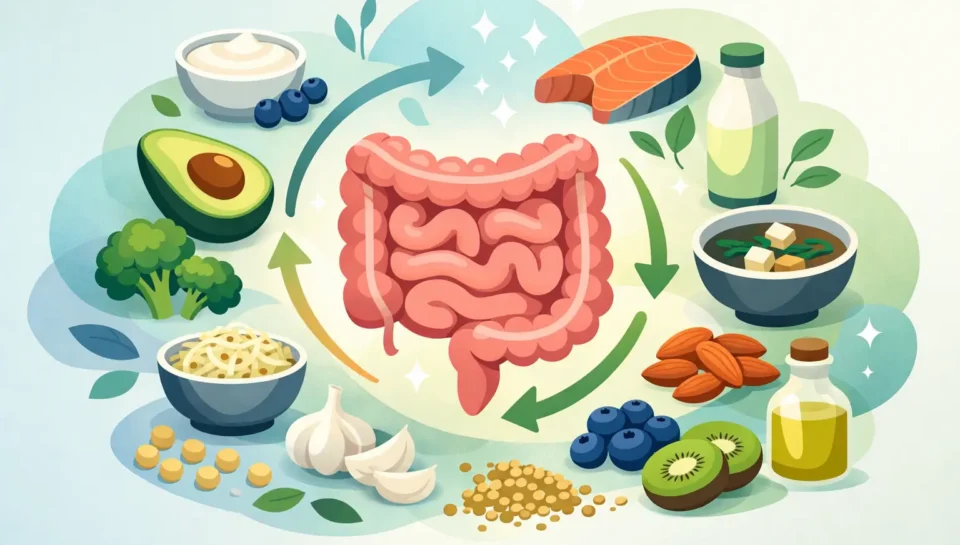
Bloating after a healthy meal, unpredictable bowels, a heavy feeling after eating, or that sense that your digestion is never quite settled – these are often the moments that send people searching for foods for better gut balance. The good news is that your gut usually responds well to steady, nourishing support. The less helpful news is that there is no single miracle food. Gut balance is built through patterns, not quick fixes.
When we talk about gut balance, we are really talking about a healthier internal environment. That includes the bacteria and other microbes in the digestive tract, the strength of the gut lining, the way your body breaks food down, and even how stress affects digestion. Food can support all of these areas, but it needs to be chosen with care. A food that helps one person feel lighter and more regular may leave another feeling uncomfortable, especially if there are food intolerances, IBS tendencies, or long-standing digestive inflammation in the picture.
Why foods for better gut balance work best in combination
The gut thrives on diversity. Rather than relying on one superfood, it is usually more effective to include a range of fibres, fermented foods, polyphenol-rich plants, and soothing whole foods across the week. This gives beneficial gut bacteria a broader food supply and helps reduce the strain that can come from repetitive, processed eating habits.
It is also worth remembering that more is not always better. If your digestion is sensitive, suddenly adding large amounts of fibre or fermented food can lead to more wind, cramping, or bloating at first. In clinic, this is often where people lose confidence and assume the food is wrong for them. More often, the issue is pace. A gentle introduction tends to work far better.
11 foods for better gut balance
Live natural yoghurt and kefir
These are often a sensible starting point because they contain beneficial bacteria that may help support microbial diversity. Kefir is usually more potent than yoghurt, but also more intense for some people. If dairy does not suit you, there are non-dairy versions, though it is worth checking that they contain live cultures and are not heavily sweetened.
A spoonful or two with breakfast can be enough at first. There is no prize for rushing. If you know dairy leaves you congested, bloated, or uncomfortable, this may not be the best route for you.
Sauerkraut and kimchi
Fermented vegetables can be very supportive for the gut because they bring both live bacteria and plant compounds to the table. Sauerkraut is usually the gentler option. Kimchi can be excellent too, though the chilli, garlic, and stronger flavour may irritate some sensitive digestive systems.
The key here is portion size. A tablespoon alongside a meal can be plenty. Starting with half a jar in one sitting is unlikely to end well.
Oats
Oats are one of the most useful everyday foods for gut support. They contain beta-glucan, a soluble fibre that can help feed beneficial gut bacteria while also supporting steadier blood sugar and cholesterol balance. For many people, porridge is one of the simplest ways to build a calmer digestive routine.
If you feel heavy after oats, consider the portion, what you are eating them with, and how quickly you are eating. Sometimes the food is not the problem – the combination or pace is.
Ground linseeds
Linseeds, also called flaxseeds, can be particularly helpful for bowel regularity. They provide fibre and healthy fats, and when ground they are easier to digest and absorb. They can support both constipation and general sluggishness in the gut when used consistently and with enough fluid.
One teaspoon added to porridge, natural yoghurt, or a smoothie is often enough to begin with. Too much too soon may leave you feeling more bloated rather than better.
Cooked apples and pears
Raw fruit is not always easy on a sensitive gut, but gently stewed apples or pears can be a different story. They contain pectin, a type of soluble fibre that can help support the gut lining and nourish beneficial bacteria. Cooking also softens the fruit, making it easier to digest.
This is a lovely example of how traditional food wisdom still matters. Warm, simple, cooked foods often suit the digestive system better than cold, rushed meals eaten on the go.
Garlic and onions
These are rich in prebiotic fibres, which act as food for beneficial bacteria. For some people they are brilliant for long-term gut health. For others, particularly those with IBS or FODMAP sensitivity, they are among the first triggers for bloating and discomfort.
That does not make them bad foods. It simply means context matters. If you tolerate them, they can be valuable. If they clearly aggravate symptoms, forcing them in because they are supposed to be healthy is not helpful.
Leeks, asparagus, and Jerusalem artichokes
These vegetables are also prebiotic-rich and can help encourage the growth of beneficial microbes. Leeks and asparagus are often easier to work with than Jerusalem artichokes, which are famous for causing wind in even the healthiest of guts.
Roasting or lightly steaming them can make them gentler. If your digestion is fragile, choose one at a time and notice how your body responds over several days.
Lentils and chickpeas
Pulses are excellent for gut balance because they offer fibre, resistant starch, and plant diversity. They can help support regularity and feed beneficial bacteria, especially when eaten several times a week. They also support blood sugar balance, which matters more for digestive health than many people realise.
That said, pulses need respect. Tinned varieties are often easier to digest than dried, especially when rinsed well. Smaller portions tend to be better tolerated than large, fibre-heavy meals.
Leafy greens
Spinach, rocket, watercress, chard, and similar greens bring minerals, plant compounds, and gentle fibre that support the whole digestive environment. They are not usually dramatic, but that is part of their value. The gut often responds best to quiet consistency.
If salads leave you cold and uncomfortable, lightly wilted greens may suit you better. The healthiest choice is the one your body can actually manage and use.
Berries
Blueberries, raspberries, blackberries, and strawberries contain polyphenols, which help support beneficial gut bacteria and reduce oxidative stress. They are a very practical way to add variety without needing to overhaul your diet.
Frozen berries can work just as well as fresh. A handful added to breakfast or served with live yoghurt is a simple habit that can make a real difference over time.
Extra virgin olive oil
Olive oil is not usually the first food people think of for gut health, but it deserves a place here. It contains anti-inflammatory compounds and supports a style of eating that tends to be kinder to digestion overall. Used over vegetables, soups, or cooked meals, it can also help make food feel more satisfying, which matters when people are trying to move away from restrictive patterns.
How to eat for better gut balance without upsetting your system
A healthy gut rarely comes from adding one worthy ingredient to an otherwise stressful eating pattern. It is helped by regular meals, chewing properly, eating in a calmer state, and choosing foods that your body can tolerate. This is where a more personalised approach becomes so valuable.
If your gut is very reactive, start with cooked foods, softer fibres, and small amounts of fermented foods. If constipation is the main issue, soluble fibre, fluids, and healthy fats often need attention together. If bloating is constant, look beyond fibre alone and consider food intolerances, stress, hormone shifts, and how efficiently you are digesting in the first place.
For many women over 30, gut changes do not happen in isolation. Hormonal fluctuations, poor sleep, stress, rushed meals, and years of dieting can all leave the digestive system more vulnerable. This is one reason why a whole-person view matters so much. The gut listens to more than food.
When healthy foods make symptoms worse
This is one of the most frustrating parts of digestive healing. You clean up your diet, add fermented foods, increase fibre, and somehow feel worse. It does not mean you have failed. It usually means your gut needs a more measured approach.
Sometimes the issue is quantity. Sometimes it is food intolerance. Sometimes the digestive system is so inflamed or sluggish that even beneficial foods need to be introduced in stages. In practice, the most useful question is not whether a food is healthy on paper, but whether it is supportive for you right now.
At Ask Nutrition, this personalised view sits at the heart of better digestive health. Food can be powerful, but only when it is matched to the person in front of you.
A settled gut is rarely built through perfection. It grows through patience, observation, and small choices repeated often enough for the body to trust them.