

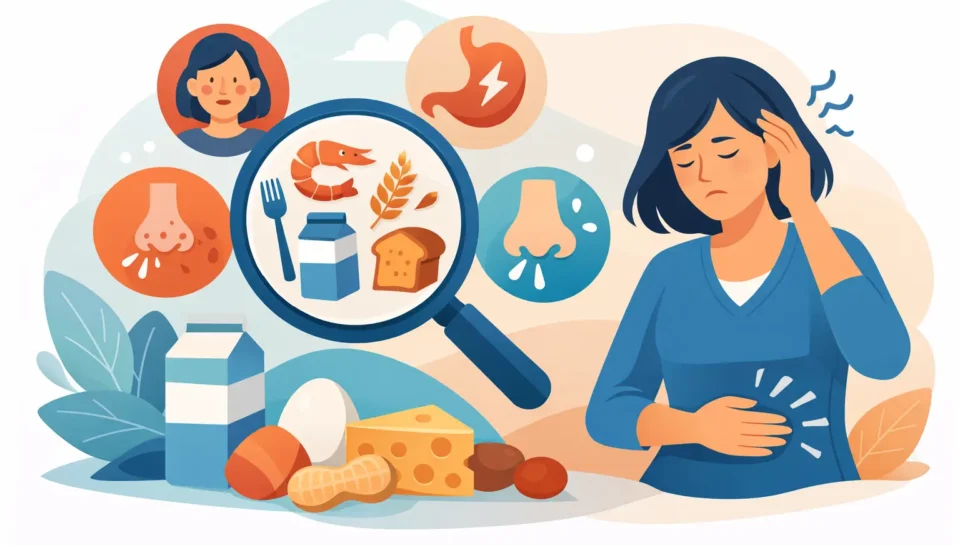
You eat what seems like a healthy meal, yet an hour later your stomach feels tight, your energy drops and your mind turns foggy. By the next day, it has passed, so it is easy to dismiss. But when these reactions keep repeating, often in subtle ways, food sensitivity symptoms may be part of the picture.
Unlike an immediate food allergy, a food sensitivity can be slower, less dramatic and far more confusing. Symptoms may appear several hours later, or even the next day, which makes the connection difficult to spot. Many people live with bloating, headaches, skin flares, low mood or fatigue for years without realising that a regular food could be contributing.
What are food sensitivity symptoms?
Food sensitivity symptoms are the body’s way of showing that a particular food may not be suiting you well. This does not always mean the food is harmful in itself. A food that nourishes one person beautifully may trigger discomfort in another, depending on digestion, gut health, stress levels, hormone balance and overall resilience.
This is where people can become frustrated. They may be eating foods widely described as healthy, yet still feel unwell. That does not mean the body is failing. It usually means the body is asking for closer attention.
Food sensitivities are also different from food intolerances in the strictest medical sense, although the terms are often used interchangeably in everyday conversation. Lactose intolerance, for example, has a clearer digestive mechanism. Sensitivity is often more complex and may involve the immune system, the gut lining, inflammation, nervous system stress or a combination of factors.
Common food sensitivity symptoms
The most recognised food sensitivity symptoms tend to involve the digestive system, but the effects can reach much further. Bloating, wind, constipation, loose stools, reflux and abdominal discomfort are common. Some people feel uncomfortably full after only a small meal, while others notice that digestion seems sluggish for hours.
Outside the gut, symptoms can show up as tiredness, brain fog, headaches, aching joints, sinus congestion or skin changes such as itching, eczema or acne flare-ups. Mood can also shift. Irritability, anxiety, feeling low or simply not quite yourself can sometimes follow foods that do not agree with you.
For women, patterns may become more noticeable around hormonal changes. Perimenopause, menstrual cycles and chronic stress can all influence digestion and inflammatory responses. That is one reason symptoms may seem to worsen at certain times of life, even when the diet has not changed very much.
The signs are not always immediate
One of the biggest challenges with food sensitivities is delayed reaction. If you eat something and develop hives within minutes, the cause is easier to identify. If you eat wheat at lunch and feel foggy, bloated and irritable by evening, or wake with a headache the next morning, the trail is less obvious.
That delay often leads people to suspect the wrong food entirely, or to conclude that their symptoms are random. In practice, they are often patterned, but the pattern needs careful observation rather than guesswork.
Why symptoms can seem so varied
Food does not affect only one body system. If the gut is irritated, the ripple effect may be felt in energy, sleep, concentration, skin and mood. The digestive tract communicates constantly with the immune system, the nervous system and the hormonal system. This is why one person’s sensitivity may cause bloating, while another person’s causes migraines or exhaustion.
The state of the gut lining matters too. When digestion is compromised, larger food particles may place a greater burden on the immune system. Stress can make this worse. Many people notice their symptoms become stronger during busy periods, emotional strain or poor sleep. The same meal may feel manageable one week and problematic the next.
This is why a whole-person view matters. Looking only at the food on the plate can miss the deeper reasons the body has become reactive.
Foods that are often linked with sensitivity
There is no single list that applies to everyone, but certain foods appear more often in clinical conversations. Dairy, wheat, eggs, soya, yeast and some nuts are common examples. For others, caffeine, alcohol, highly processed foods or foods rich in additives may play a role.
Even so, it is wise not to assume. Removing large groups of foods without guidance can create unnecessary restriction, stress around eating and nutritional gaps. It can also send attention in the wrong direction if the real issue is poor digestion, chronic stress or an imbalanced gut.
Healthy foods can still be problematic
This is an important point, especially for health-conscious people who are genuinely trying to support their wellbeing. Foods such as yoghurt, oats, eggs, tomatoes or almonds may be nourishing for many people, yet still trigger symptoms in some individuals. There is no moral value in that. It is simply information.
The goal is not to fear food. The goal is to understand your body’s responses with clarity and care.
How to tell whether food is really involved
If symptoms come and go, keep a simple record for two to three weeks. Note what you eat, but also how you feel physically and emotionally, your sleep, stress levels and bowel habits. Patterns often become clearer when you stop looking at single meals and start observing the wider picture.
It also helps to be specific. Rather than writing “felt bad”, note whether you had bloating, nausea, headache, itching, poor concentration or low energy, and when it started. Timing matters. Reactions that show up repeatedly after particular foods deserve further exploration.
That said, symptoms alone cannot tell the whole story. Bloating might point to a food sensitivity, but it could also relate to constipation, low stomach acid, IBS, hormone changes or eating too quickly. Skin flare-ups may involve food, but also stress, cosmetics, alcohol or poor sleep. This is why broad assumptions can be misleading.
When testing may be helpful
For some people, testing can add useful structure, particularly when symptoms are persistent and confusing. Used well, it can help identify potential triggers and guide a more personalised plan. Used poorly, it can lead to fear, over-restriction and a long list of foods someone believes they can never eat again.
The value lies in interpretation. Results need to be viewed alongside symptoms, health history, digestive function and lifestyle. A test should support a thoughtful process, not replace one.
At Ask Nutrition, this more balanced approach matters. The aim is not simply to remove foods, but to understand why the body is reacting and how to restore resilience over time.
What support often looks like in practice
When food sensitivity symptoms are present, the first step is usually to calm the system rather than chase perfection. That may involve reducing the most likely triggers for a period, supporting digestion, improving bowel function and creating more regular eating habits. For some, stress management is just as important as dietary change.
Gut healing is rarely about one dramatic intervention. It is more often a steady process of reducing irritation, improving digestive capacity and helping the body feel safe again. As symptoms settle, some foods may be reintroduced carefully to see what is truly a problem and what has simply become difficult during a period of imbalance.
This can be especially reassuring for people who are tired of trying one diet after another. The intention is not endless elimination. It is to move towards a broader, more comfortable relationship with food wherever possible.
When to seek professional guidance
If you are experiencing ongoing digestive discomfort, unexplained fatigue, skin flare-ups, headaches or a sense that your body reacts unpredictably to food, it is worth seeking support. This is particularly true if symptoms are affecting your confidence, social life or ability to eat with ease.
You should also speak to a medical professional if you have severe reactions, unintended weight loss, blood in the stool, persistent pain or symptoms that are getting worse. Not every symptom linked to food is a sensitivity, and it is important not to overlook other health concerns.
A thoughtful practitioner can help you look at the full picture – food, digestion, stress, hormones and emotional wellbeing – so the plan feels realistic and grounded rather than overwhelming.
If you suspect food sensitivity symptoms, trust that your body is giving you useful information. You do not need to decode it alone, and you do not need to accept feeling below par as normal.