

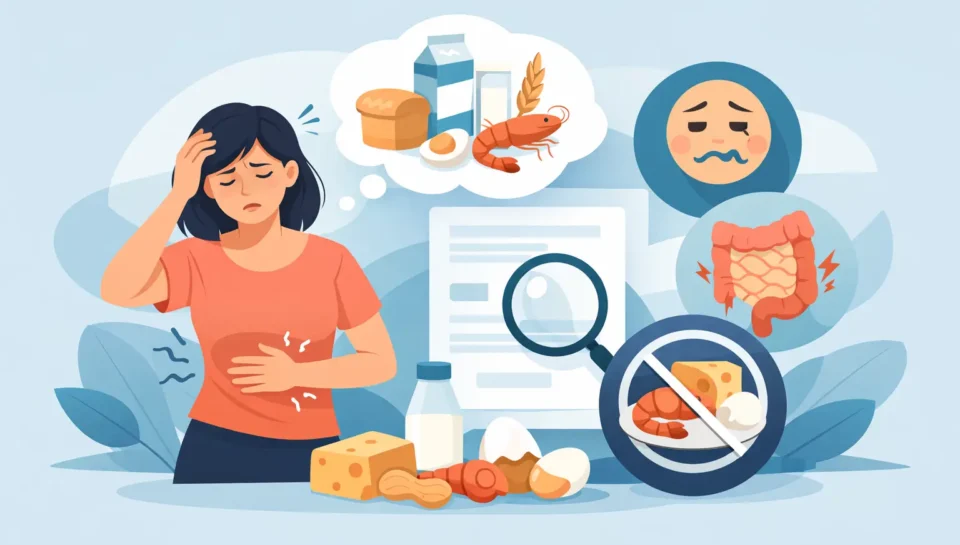
You may eat a food on Monday and feel only slightly bloated, then have the same meal on Thursday and end up tired, foggy and uncomfortable for the rest of the day. That is part of what makes a guide to food intolerance symptoms so useful – the signs are often inconsistent, delayed and easy to dismiss as stress, hormones or simply a busy life.
Food intolerance is rarely as dramatic as a true food allergy. Instead, it tends to show up as a collection of nagging symptoms that chip away at how you feel. Many people live with this for years, accepting bloating, sluggish digestion, headaches or low energy as normal when they are actually signs that the body is struggling with something it is being asked to process regularly.
What food intolerance symptoms can look like
The most recognised symptoms are digestive. Bloating after meals, excess wind, constipation, loose stools, stomach cramps and a heavy feeling after eating are all common. Some people feel uncomfortably full very quickly, while others notice their abdomen becoming more distended as the day goes on.
But digestion is only part of the picture. Food intolerance symptoms can also appear as fatigue, brain fog, headaches, skin irritation, sinus congestion, joint discomfort and changes in mood. If you feel flat, irritable or mentally cloudy without an obvious reason, the food you are eating may be one piece of the puzzle.
This is where people can become confused. They may not connect a recurring headache or eczema flare-up with something they ate earlier that day, or even the day before. Unlike an allergy, an intolerance often produces a slower, less obvious reaction. That delay makes patterns harder to spot without stepping back and looking carefully.
The difference between food intolerance and food allergy
It helps to separate these two clearly. A food allergy involves the immune system and can cause rapid reactions such as swelling, hives, wheezing or, in severe cases, anaphylaxis. That requires urgent medical care and proper medical assessment.
A food intolerance is different. It does not usually trigger an immediate, life-threatening response, but it can still have a significant effect on daily wellbeing. Symptoms may build gradually, vary in intensity and depend on how much of the food you have eaten, what else you have eaten with it, your stress levels and the overall state of your digestion.
In practice, this means you might tolerate a small amount of a food one day and struggle with it the next. That does not mean the symptom is imagined. It means the body is dynamic, and tolerance can change depending on what else is going on.
Common food intolerance symptoms beyond the gut
When the digestive system is under strain, the whole body can feel it. One person may notice a coated tongue, poor sleep and a general sense of heaviness. Another may develop skin flare-ups, fluid retention or a feeling of being inflamed and uncomfortable.
Hormonal shifts can make this more noticeable, especially for women over 30. Around the menstrual cycle, during perimenopause or when stress is high, the body may become more reactive. A food that seemed manageable before can suddenly contribute to bloating, tiredness or mood changes more strongly.
There is also an emotional layer. When you do not feel well after eating, it can create anxiety around food, social occasions and even simple daily routines. Many people begin to lose trust in their bodies. A compassionate approach matters here, because fear-based restriction is rarely the answer.
Why symptoms are so easy to miss
Food intolerance symptoms often overlap with other concerns. Bloating can be blamed on eating too quickly. Headaches can be put down to dehydration. Fatigue may be explained away as poor sleep or a demanding schedule. Sometimes those explanations are true, but sometimes they only tell part of the story.
Another challenge is repetition. If you eat the same foods often, you may not notice they are contributing to how you feel because the reaction has become part of your normal baseline. If dairy, wheat, eggs or certain additives appear in your diet every day, the body may never get enough of a break for the pattern to become obvious.
Portion size matters too. Some people react only when they cross a certain threshold. Others cope reasonably well until several irritating foods build up in the same day. That is why rigid rules do not help everyone. The body responds to patterns, load and resilience, not just a single ingredient in isolation.
A practical guide to food intolerance symptoms and patterns
If you suspect food intolerance, the most useful first step is observation rather than drastic change. Start paying attention to what happens after meals. Notice not only digestion, but also your energy, mood, concentration, skin and sleep.
A simple symptom diary can be revealing. Write down what you eat, when you eat it and how you feel over the next 24 to 48 hours. Keep it straightforward so you can stay consistent. You are looking for repeated patterns, not perfection.
It also helps to note the context. Were you rushing? Did you eat late? Were you under pressure? Stress has a powerful effect on digestion, and a compromised digestive system may react more strongly to foods that would otherwise be tolerated better.
If a pattern becomes clear, a short, structured elimination under professional guidance can be helpful. This is not about removing half your diet on suspicion. Done well, it is targeted, time-limited and followed by careful reintroduction so you can understand what your body is actually telling you.
Which foods are commonly involved
Different people react to different things, but some foods appear more often than others. Dairy, wheat, gluten-containing grains, eggs, soya, yeast, caffeine and alcohol are frequent triggers. Some people are also sensitive to highly processed foods, artificial sweeteners or additives.
That said, common does not mean universal. It is easy to assume gluten is the issue because it is often discussed, only to find that the real problem lies elsewhere. Equally, a food that tests as problematic or seems suspicious should always be interpreted in the context of symptoms, diet, stress, digestion and overall health.
This is why a whole-person view matters. Food intolerance rarely sits on its own. Gut imbalance, chronic stress, poor chewing, rushed meals, constipation and lack of restorative sleep can all lower resilience and make symptoms worse.
When to get support
If symptoms are persistent, affecting your quality of life or leaving you confused about what to eat, professional support can save a great deal of frustration. Guesswork often leads to overly restrictive diets that leave people undernourished, stressed and no clearer about the root issue.
A practitioner can help you distinguish between likely intolerance patterns, digestive dysfunction and other factors that may need medical assessment. This is especially important if you have severe symptoms, unexplained weight loss, ongoing pain, bleeding, frequent diarrhoea or symptoms that are worsening. Those signs should never be self-managed without proper medical advice.
For many people, the real goal is not simply to identify a troublesome food. It is to improve the terrain of the body so digestion works better, inflammation settles and energy returns. Sometimes that means adjusting food choices. Sometimes it means supporting the gut, addressing constipation, eating more calmly or looking at the impact of emotional stress on the digestive system.
At Ask Nutrition, this broader view is central. Symptoms are not treated as isolated annoyances but as useful signals that deserve careful, individual attention.
The aim is clarity, not restriction
One of the most healing shifts you can make is to stop battling your body and start listening to it with patience. Food intolerance symptoms are real, but they are also nuanced. They can change over time, improve with the right support and become much easier to understand when you look at the full picture rather than chasing a single culprit.
If your body has been whispering through bloating, fatigue, headaches or skin flare-ups, it is worth listening with kindness. Often, the path forward begins not with a dramatic overhaul, but with calm, informed attention to the signs that have been there all along.