

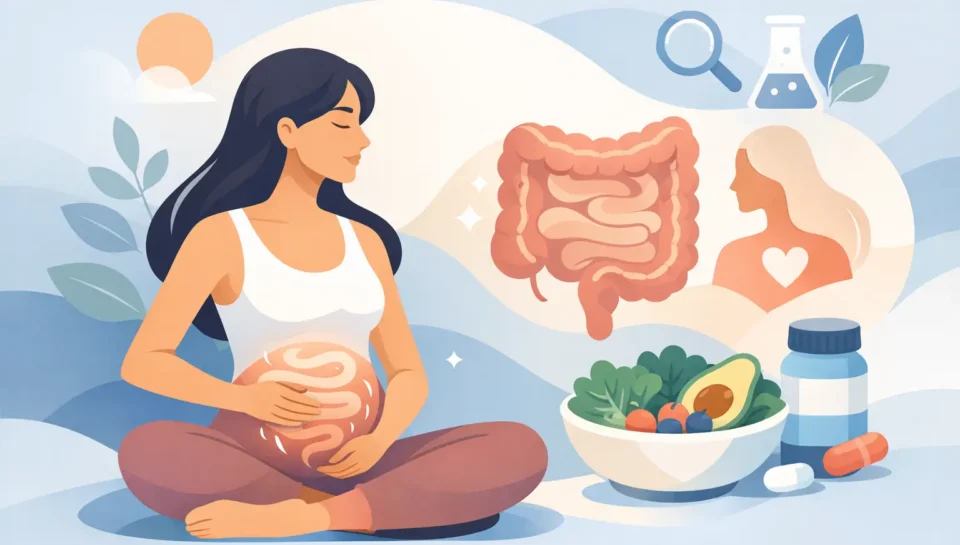
Bloating that builds by late afternoon. Constipation that feels normal only because it has been there for years. A stomach that seems to react differently at different points in your cycle. These experiences are common, but they are not something you need to dismiss or simply endure. This gut health for women guide is a gentle place to begin understanding the patterns your body may be trying to show you.
Women’s digestive health is rarely just about food. Hormones, stress, sleep, medication, movement, past dieting, busy family life and emotional wellbeing can all influence the gut. Lasting improvement usually comes not from a restrictive plan, but from listening carefully, making manageable changes and seeking the right support when symptoms persist.
Why women’s gut health can feel so changeable
The gut and the female hormonal system are closely connected. Oestrogen and progesterone can affect how quickly food moves through the digestive tract, how much fluid the body holds and how sensitive the bowel feels. This is why some women notice constipation before a period, looser stools during it, or more bloating around ovulation.
Life stages can add further changes. Pregnancy, the postnatal period, perimenopause and menopause may all alter digestion, appetite, sleep and energy. At the same time, women are often the people holding many responsibilities together. Eating hurriedly, skipping meals, relying on caffeine to get through the day and carrying unspoken stress can leave the digestive system in a constant state of alert.
There is no single “women’s gut” diet. What helps one person may aggravate another. A large raw salad might feel nourishing for one woman and leave another uncomfortable and distended. The aim is not to fear food, but to understand your own tolerance, routine and needs.
Gut health for women: begin with your daily rhythm
Before cutting out foods, look at the foundations. The digestive system responds well to regularity. Try to eat meals at reasonably consistent times and give yourself enough time to sit down, chew and register that you are eating. Even five calm minutes before a meal can support the shift from a stressed state towards one in which digestion is better able to do its work.
Protein, fibre and nourishing fats at meals can help steady energy and appetite. This might mean eggs with vegetables on toast, porridge with yoghurt and seeds, or a warming soup with beans, chicken or fish. The best choice depends on your preferences, culture, budget and digestive comfort. If beans, lentils or high-fibre foods trigger discomfort, do not assume you have failed. The type, amount and preparation can all matter, and a gradual approach is often kinder to the gut.
Hydration matters too, particularly if constipation is an issue. Water, herbal teas and water-rich foods can all contribute. Fibre without enough fluid can sometimes make sluggish bowels feel worse, so increase it slowly rather than making an abrupt change overnight.
Movement is another underestimated support. A daily walk, gentle stretching or regular exercise can encourage bowel motility and help regulate stress. You do not need an intense routine to earn better digestion. Consistency is more useful than perfection.
Notice patterns without becoming ruled by them
A simple food and symptom diary for two weeks can be revealing. Record meals, drinks, bowel movements, bloating, sleep, stress levels and where you are in your menstrual cycle. The purpose is curiosity, not self-criticism. You may find that symptoms follow a pattern of rushed lunches, poor sleep, wine at the weekend or a particular food eaten in a certain quantity.
It is also useful to observe bowel habits with honesty. A healthy pattern is individual, but regularly straining, going several days without opening your bowels, urgency, pain or a feeling of incomplete emptying are all worth paying attention to. Many women have normalised discomfort for so long that they do not mention it during appointments.
Food sensitivities can be part of the picture for some people, especially where symptoms are recurrent and seemingly linked to particular foods. However, symptoms such as bloating can have many possible causes. Broadly eliminating foods without guidance can make eating more stressful, reduce dietary variety and leave important nutritional gaps. A personalised conversation can help distinguish between a possible intolerance, a digestive imbalance, hormonal influences and the effects of lifestyle.
Support the gut microbiome with variety, not pressure
The microbiome is the community of microorganisms living largely in the large intestine. It is influenced by what we eat, but it is also shaped by sleep, stress, antibiotics, illness, travel and age. Rather than chasing a perfect microbiome or buying every new supplement, focus first on variety and tolerance.
Plant foods provide different fibres that nourish gut bacteria. Vegetables, fruit, oats, nuts, seeds, pulses, herbs and wholegrains can all play a part. Aim to expand variety over time, not all at once. Cooked vegetables, soups, stews and lightly stewed fruit may be more comfortable than large amounts of raw produce for a sensitive digestive system.
Fermented foods such as live yoghurt, kefir, sauerkraut or kimchi suit some people well, while others find them unhelpful, particularly at first. Start with small portions and notice how you feel. Probiotic supplements may be useful in certain circumstances, but they are not universally necessary and the right choice depends on your symptoms, history and current health.
Stress is not “all in your head”
The gut and brain communicate constantly. When you are anxious, grieving, overworked or trying to keep everyone else happy, the body may prioritise protection over digestion. This can affect appetite, acid production, bowel movement and pain sensitivity. Recognising this is not about blaming stress for physical symptoms. It is about giving the nervous system a place in the healing conversation.
Build in small moments that tell your body it is safe to slow down. That could be breathing slowly before a meal, stepping outside after work, keeping your phone away from the table or speaking honestly with someone you trust. If emotional wellbeing has been under strain, appropriate therapeutic support can be as valuable as dietary change.
When digestive symptoms need medical attention
Holistic support works best alongside appropriate medical care. Please speak to your GP promptly if you experience any of the following:
- blood in your stool, black stools or unexplained rectal bleeding
- unintentional weight loss, ongoing fever or severe fatigue
- persistent vomiting, severe abdominal pain or a new abdominal lump
- a significant new change in bowel habit, especially after the age of 50, or a strong family history of bowel cancer, coeliac disease or inflammatory bowel disease
It is also sensible to seek medical assessment for symptoms that are persistent, worsening or disrupting your quality of life. Conditions such as coeliac disease, endometriosis, thyroid imbalance, iron deficiency and irritable bowel syndrome can overlap with digestive symptoms, and they deserve proper consideration. Do not begin a gluten-free diet before testing for coeliac disease unless a clinician has advised you to do so, as this can affect test results.
Personalised support can bring clarity
If you have tried the usual advice and still feel uncomfortable, tired or confused around food, a more individual approach can be reassuring. At Ask Nutrition, the focus is on exploring your full picture: digestive symptoms, bowel habits, food reactions, lifestyle, stress, energy and health history. This creates space for practical recommendations that feel realistic rather than another demanding set of rules.
For some women, the next step may involve improving meal rhythm and bowel regularity. For others, it may be careful exploration of suspected food intolerances, support through hormonal change or addressing the emotional load that is affecting digestion. The right plan is the one you can sustain and that respects your body’s signals.
Your gut does not need punishment, panic or a complicated cleanse. It needs patient attention. Start with one small change you can repeat this week, then allow your body time to respond. That is often where clearer digestion, steadier energy and greater trust in yourself begin.