

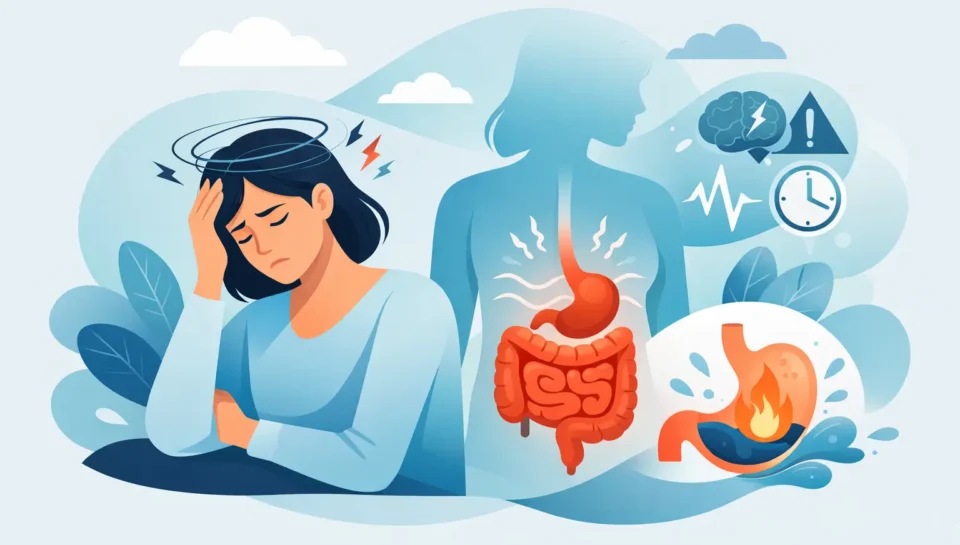
That sudden rush to the loo before a difficult meeting, the bloating that appears during a tense week, the loss of appetite when life feels overwhelming – these experiences are more common than many people realise. If you have been wondering, can stress cause digestive symptoms, the answer is yes. For many people, the gut is one of the first places stress shows up.
This does not mean your symptoms are imagined, exaggerated or “just stress”. It means the digestive system is closely connected to the brain, the nervous system and your emotional state. When stress becomes frequent or prolonged, digestion can change quite noticeably. Understanding that connection can be a powerful first step towards feeling better.
Can stress cause digestive symptoms in everyday life?
Yes, and often in ways that seem inconsistent at first. One person may experience nausea and a tight stomach before social situations. Another may notice constipation during busy periods, then loose stools after an argument or poor sleep. Someone else may feel reflux, cramping or a sense that food just sits heavily after meals when they are under pressure.
The body does not separate emotional strain from physical function as neatly as we might like. When you feel threatened, overworked, worried or emotionally depleted, your nervous system shifts into a more protective state. In that state, digestion is not the body’s top priority. Blood flow, digestive secretions and bowel motility can all change.
For some, this leads to food moving too quickly through the gut. For others, everything slows down. That is why stress can contribute to both diarrhoea and constipation, both reduced appetite and comfort eating, both reflux and a knotted stomach. The pattern depends on the individual, their health history, their hormone balance, their eating habits and the type of stress they are carrying.
Why the gut reacts so strongly to stress
The digestive system has an extensive network of nerves and communicates constantly with the brain. You may hear this called the gut-brain axis. In practice, it means your thoughts, emotions and stress response can influence how your digestive tract behaves.
When stress hormones rise, several things may happen at once. Stomach acid levels may alter. Digestive enzyme output can become less efficient. The muscles of the digestive tract may contract too quickly or too slowly. You may swallow more air, eat faster, chew less or crave foods that are harder to digest. Sleep may worsen, which places further strain on the gut.
Stress can also affect the gut lining and the balance of bacteria in the bowel. That does not happen from one difficult afternoon, but ongoing emotional pressure can create a pattern where the digestive system becomes more sensitive and reactive. This is one reason symptoms can linger even after the original trigger has passed.
For women over 30, this picture can become more layered. Hormonal changes, fluctuating energy, caring responsibilities, poor sleep and long-term pressure can all influence the nervous system. When the body is already stretched, the gut often reflects that strain.
What digestive symptoms can stress trigger?
Stress-related digestive symptoms vary, but there are some common patterns. These include bloating, wind, nausea, indigestion, acid reflux, abdominal discomfort, diarrhoea, constipation, reduced appetite and feeling overly full after eating.
Some people also notice a change in bowel habits that comes and goes without a clear food trigger. Others become more reactive to foods they previously tolerated well. This does not always mean the food is the root cause. Sometimes the digestive system is simply more irritated, inflamed or poorly regulated because the body has been under strain.
There can also be a cyclical element. You feel stressed, your digestion worsens, then the symptoms themselves create more worry. Over time, that loop can make eating feel tense rather than nourishing. It is a very human response, but it does deserve attention.
When it may not be stress alone
Although stress can absolutely affect digestion, it should not be used to dismiss persistent or severe symptoms. Bloating, pain, reflux, bowel changes and fatigue may also relate to food intolerances, gut infections, IBS, hormone imbalance, low stomach acid, gallbladder issues or other underlying concerns.
This is where a whole-person view matters. Stress may be one part of the picture, but not always the only part. In practice, many people have both a stressed nervous system and a digestive imbalance that need support together.
Can stress cause digestive symptoms even if you eat well?
Yes. A nutritious diet is valuable, but it does not fully protect the body from the effects of chronic stress. You can eat carefully chosen meals and still struggle with bloating or bowel irregularity if you are exhausted, rushing, anxious or emotionally overloaded.
How you eat matters alongside what you eat. If meals are eaten quickly at a desk, in the car or while feeling tense, the body may not enter the relaxed state needed for proper digestion. Chewing may be poor, stomach secretions may be reduced and the bowel may become more reactive.
This is not about creating more rules or blame. It is about recognising that digestion is not a purely mechanical process. It is deeply influenced by your pace, your emotions and your sense of safety.
Gentle ways to support a stressed digestive system
If stress is affecting your gut, the most effective support is usually steady and realistic rather than extreme. The aim is to calm the system, reduce the load on digestion and understand your own triggers with compassion.
Begin with the foundations. Slow your meals down where possible. Sit rather than stand. Chew more thoroughly. Try not to eat while scrolling, working or having difficult conversations. These small shifts can help the nervous system move towards a calmer state.
It can also help to simplify food for a period if your symptoms are flaring. Warm, easy-to-digest meals often feel kinder than heavy, highly processed or very rich foods. For some people, caffeine and alcohol make stress-related gut symptoms worse, especially if sleep is already poor.
Equally important is looking beyond food. Gentle movement, time outdoors, steadier blood sugar, proper rest and emotional support all matter. Breathing practices can be especially helpful before meals, because they send a signal to the body that it is safe to receive and digest food.
If your symptoms are frequent, keeping a simple symptom journal may reveal useful patterns. You may notice that your bloating is less about one ingredient and more about eating in a rush, sleeping badly or carrying unspoken tension.
Support that goes deeper than symptom control
Sometimes people try to solve digestive symptoms by removing more and more foods, when the deeper issue is nervous system overload. Restrictive eating can occasionally make the picture more stressful. There is a balance to be found.
A more supportive approach is to explore digestion from several angles – food triggers, gut health, stress resilience, sleep, hormones and emotional well-being. That is often where progress becomes more sustainable. At Ask Nutrition, this whole-person way of working is central because the gut rarely exists in isolation from the rest of your life.
When to seek professional advice
If digestive symptoms are ongoing, worsening or affecting your quality of life, it is wise to seek professional guidance. The same applies if you have unexplained weight loss, blood in the stool, persistent vomiting, significant pain, trouble swallowing or marked fatigue. Stress may be involved, but those symptoms should be assessed properly.
For less urgent but still frustrating issues, personalised support can help you work out whether stress is the main driver, one contributing factor or simply the thing making an existing imbalance worse. This can prevent guesswork and help you feel more confident about what your body needs.
There is also emotional relief in being heard. Many people with digestive problems have been told to avoid certain foods or to “relax”, without anyone truly joining the dots. A skilled practitioner will look at the full picture and help you move forward with clarity rather than fear.
The gut has a remarkable capacity to recover when given the right support. If stress has been speaking through your digestion, your body is not failing you – it is asking for care, attention and a gentler way forward.